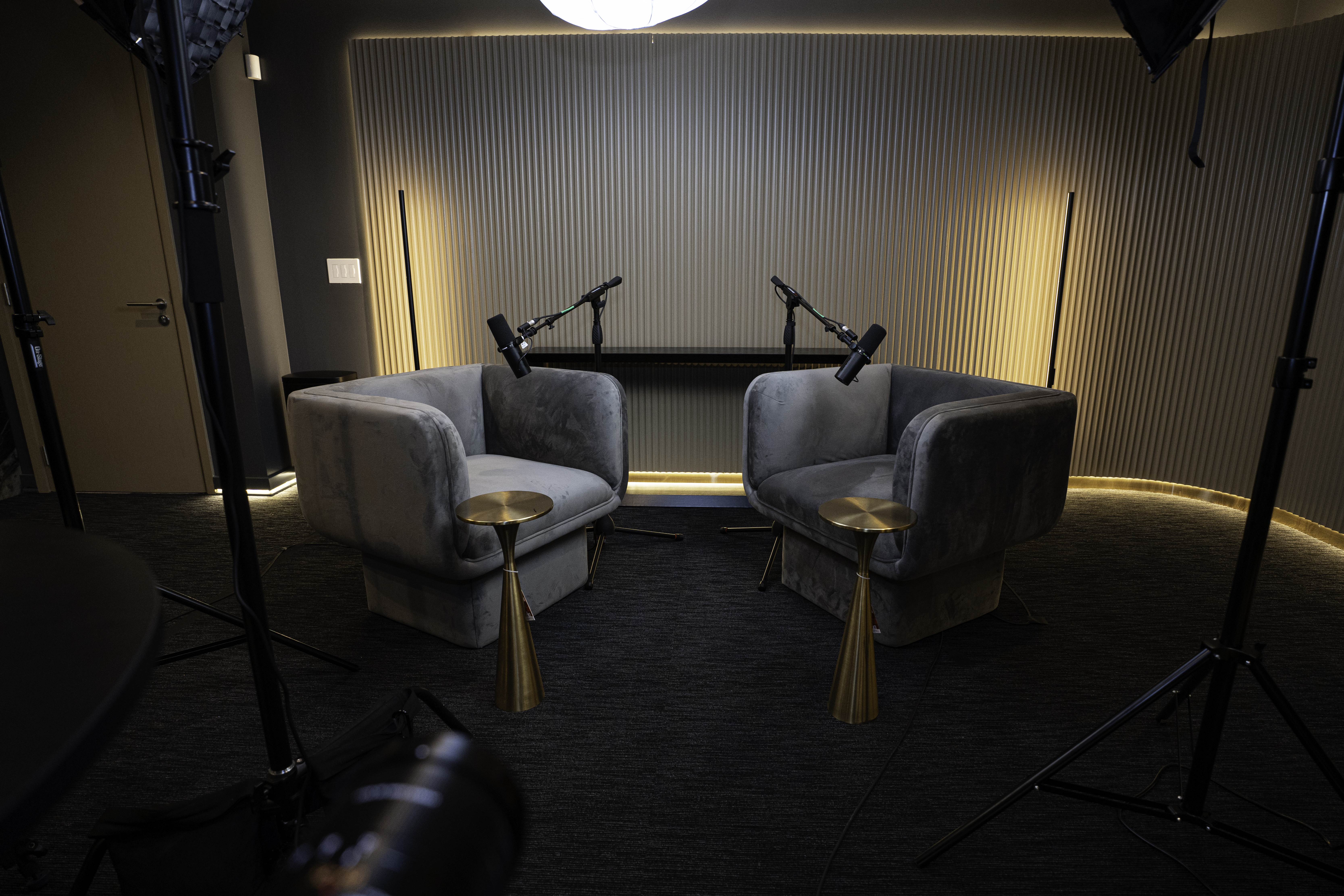
I recently partnered with a founder to get a podcast off the ground. Not a hobby show, a real content engine. His goal was to build something value-driven: a place to share information and sit down with business founders who have actually lived through outcomes, good and bad, and can talk honestly about the consequences of the decisions that got them there.
The name is still being finalized. Almost everything else is done. I handled the photography, developed the website, set up the podcast, and created the logo, start to finish in about two weeks, using AI throughout the process alongside the production tactics I've built up over the years.
The short version
What it is: A founder-interview podcast built as an in-house media property rather than an ad campaign.
Scope delivered: Logo and brand identity, website, brand photography, and full podcast setup.
Timeline: Roughly two weeks, solo, with AI compressing the parts that used to eat entire weeks.
The bigger point: Every company, small or large, should be building a media arm, not just buying ads.
What is a media arm, exactly?
A media arm is an in-house publishing function: a podcast, a video channel, a photo library, a newsletter, owned outright by the business instead of rented from a platform or an agency. It produces content on a schedule, builds an audience that belongs to the company, and doubles as the source of everything the marketing side needs.
The distinction matters. An ad campaign ends when the budget ends. A media arm compounds. Episode forty is more valuable than episode one, because by then you have a back catalog, a reputation, and a reason for people to come to you.
Why this is suddenly realistic for small businesses
The old objection was cost. Building a media operation meant hiring a producer, an editor, a designer, and a photographer, then waiting months for output. That math kept in-house media exclusive to companies with real marketing budgets.
That barrier is mostly gone. The equipment is cheap, distribution is free, and AI has collapsed the slowest parts of the process, concepting, iterating on identity, drafting copy, structuring episodes, and pushing through the revision cycles that used to require three people and two weeks of back-and-forth. What's left is taste and judgment, which is exactly the part you want a human spending time on.
What we actually built
Brand identity and logo
A podcast under a company's roof still needs to stand on its own visually. It has to feel connected to the parent business without looking like a marketing brochure, because guests need to feel like they're joining a show, not a sales funnel.
The website
Built as the home base: a place episodes live permanently, get indexed, and can be linked to by guests. Every guest who shares an episode sends traffic back to a property the company owns.
Photography
Shot in-house, which is the part most businesses skip and later regret. Once you have a real library of brand images, every downstream asset, thumbnails, social posts, press kits, the site itself, stops looking improvised. I've written about this approach to shooting on location in Documenting Spontaneity During a Luxury Yacht Shoot.
Podcast setup
The recording environment, the workflow, and the publishing pipeline, designed so the show can be produced consistently after I hand it off. A media arm that depends on one person's heroics isn't a media arm. It's a project.
The part most businesses miss: collaboration over competition
Once you own a media platform, you have something other companies want access to. That opens a door that advertising never does.
You can bring on guests. You can produce your own commercials without waiting on an agency. And you can collaborate with businesses you already partner with, or businesses that simply sit on the same shelf as you. Not competitors. Companies serving the same target demographic from a different angle.
Each of those collaborations puts your brand in front of an audience that's already qualified. That's the compounding effect, and it's only available to companies that have a platform to offer in the first place.
How to start a media arm this month
Pick one format you can sustain. One podcast or one video series. Not three channels you'll abandon by week six.
Build the brand before the content. Logo, colors, and a home on the web. It signals to guests that this is real.
Shoot a real photo library first. Everything downstream gets easier and better-looking.
Book guests from your adjacent shelf. Same audience, different offering.
Design for handoff. Document the workflow so it survives without the person who built it.
What's next
I'll be sharing a preview of the work, logo, site, and photography from the build, in a follow-up post once the show name is locked. If you're thinking about starting something similar for your own company, this is the moment to do it. The barrier to entry is the lowest it has ever been, and it won't stay that way once everyone figures it out.