I have a habit of studying businesses the way some people study film. Not the product, the system underneath it. How does this thing run when the founder isn't in the room? Here's one that stuck with me.
There's a barbershop company called Danckuts. The first location I came across was in Irvine, and the thing I loved wasn't the haircut. It was what they do after the haircut.
The detail most shops would never think of
When your cut is done, they photograph your head. Front, sides, back. So the next time you book, it doesn't matter which stylist is free, anyone can pull up the reference and reproduce the cut.
Being honest about it: I'd estimate the average stylist lands around 70,80% accuracy off those photos. The top people are probably 90,100%. But that's the point. The system doesn't depend on you getting your barber. It depends on the shop capturing enough information that the result travels between people. The knowledge lives in the system, not in one person's memory.
Turning one expert into many
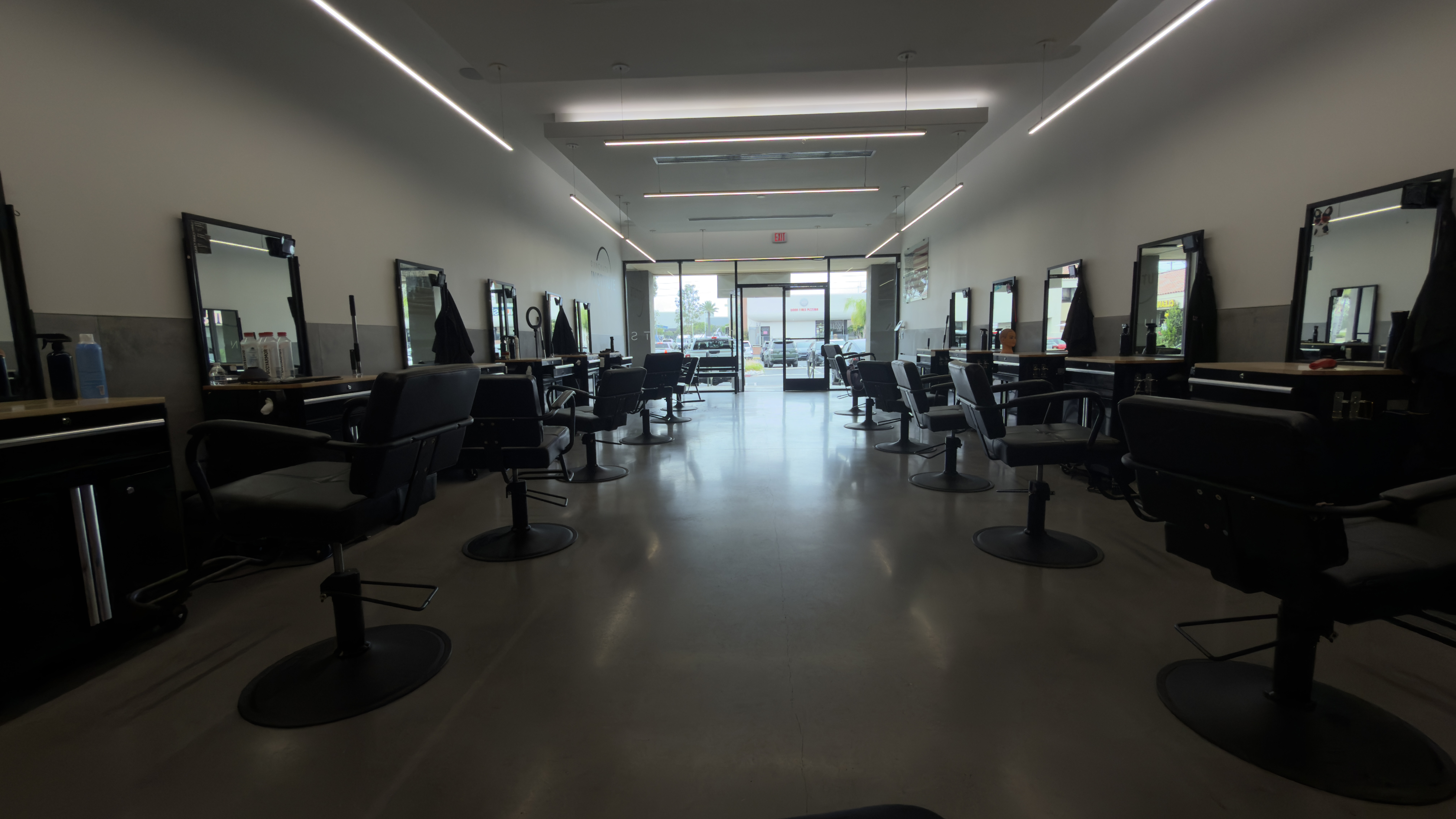
The photo above is their institute, the training side of the operation. The lead stylist also runs the administration and teaching. Her real job isn't cutting hair. It's multiplying herself: taking what she knows and training a room of students on it at a single location.
And the students aren't a cost center. Because you're getting cut by someone in training, you can book a haircut for around $20, Monday through Friday. The teaching function pays for itself. That's the part I find genuinely clever, they turned the expense of training into a revenue line, and turned one expert into a pipeline of many.
Why I can't stop thinking about it
I look at a setup like this and immediately turn it on myself. I run a video production company. And right now, the company is me. That's the honest constraint.
I'd love to scale what I know, to teach it, to hand pieces of it to other people, to take on bigger work than one person can physically shoot and edit. But scaling knowledge has a chicken-and-egg problem. To hire people, I need the income to support them. To get that income, I need to take on bigger gigs. To take on bigger gigs, I need more than one set of hands. And to have more hands, I have to be able to train them without slowing down.
Danckuts already solved that loop. The photo-reference system and the institute are the same idea applied twice: capture the process so precisely that someone else can execute it at 80% of your quality on day one, and improve from there.
What I'm actually taking from this
Where I am in 2026, the move is clear even if it's slow:
Embed deeper with bigger clients to raise income and stability, which I've been doing.
Save, deliberately, so the first hire isn't a gamble.
Dial in a training manual while I'm still solo, so it's ready before I need it, not scrambled together after.
Record the process in every format at once. Something a new person can read, watch, and listen to, so they can absorb the work quickly instead of shadowing me for months.
That last one is the Danckuts photo-reference idea translated into my world. My version of "photograph the head" is documenting a shoot and an edit so thoroughly that a student can walk in, follow it, and produce something that looks like my work, before they've developed their own instincts.
I'm not there yet. But that's the direction, and it took watching a barbershop to see it clearly. The businesses worth studying usually aren't in your own industry.