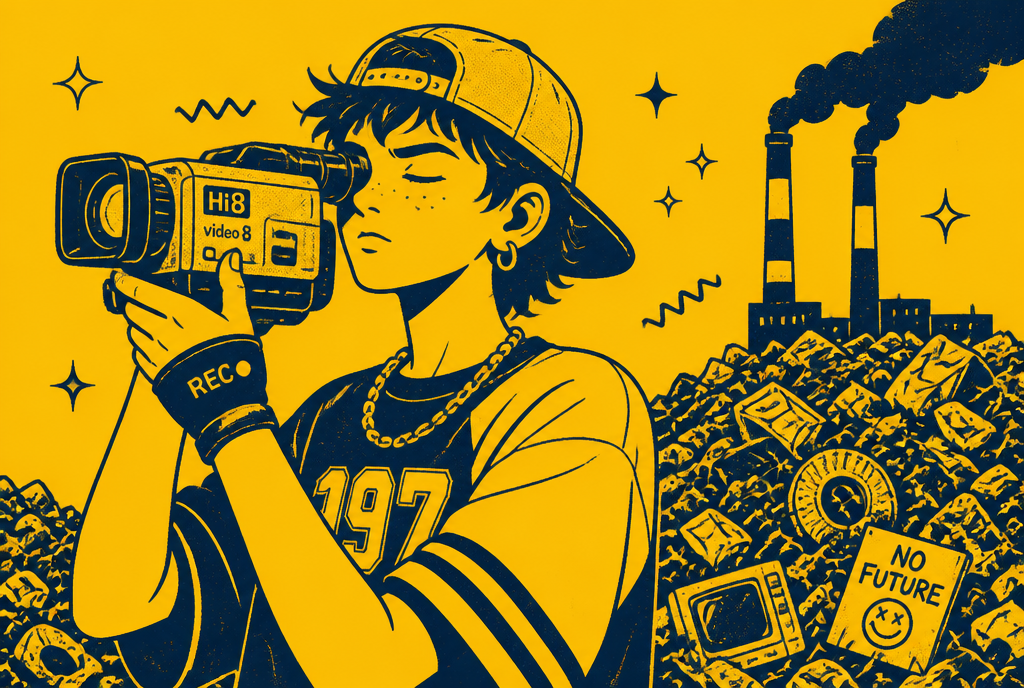
A group of high school kids in Middletown, New York picked up video cameras in 1991 and ended up exposing a toxic waste cover up that ran through their local government and into organized crime, and watching it reminded me that a creator is anybody willing to document the truth and stay with it long enough to matter.
I put on a documentary the other night called Teenage Wasteland, and I could not stop thinking about it, so I am turning it into a thought.
What actually happened in Middletown?
Back in 1991, a group of students at Middletown High School in upstate New York started a film project with their English teacher, Fred Isseks, and what began as a class assignment slowly turned into a real investigation. They noticed something was off about the ground and the water near a local landfill, and instead of shrugging it off, they grabbed their cameras and started documenting everything. They sat in on meetings and courtrooms, and they dug through reports, and they confronted officials who very much did not want to be confronted, and they kept the tape rolling through all of it. Their film was called Garbage, Gangsters, and Greed, and it came out in 1996, and the dumping they uncovered had ties to corruption and to organized crime. They eventually pulled in a congressman, Maurice Hinchey, who helped push a real investigation. And the wild part is that these were teenagers who had no idea how deep the thing they were pulling on actually went, but they did their due diligence anyway, and thirty years later that same footage became the Netflix documentary I was watching.
Why does this matter for anyone who creates?
Here is the part that got me. Those kids were not experts, and they were not connected, and they did not have anyone's permission, but they had cameras and they had the discipline to keep documenting, and that combination turned out to be enough to move a whole town. That is the kind of power I want people to understand they are sitting on, because when you decide to document something and you actually stay with it, you are building a record that did not exist before you showed up, and a record has weight, because footage is hard to argue with. So creating is less about making something pretty and more about being the person in the room who keeps the receipts and keeps showing up and refuses to look away, and it turns out that can change what powerful people are able to get away with.
What does this have to do with you and a camera?
Most people I talk to freeze up the second a camera points at them, and they tell me they are camera shy, but what I almost always find underneath is that they are clarity shy, because they are not sure yet what they are actually trying to say. Those kids in Middletown were not polished and they were not trying to be, and it did not matter at all, because they were clear about what they were chasing, and that clarity carried the entire thing. So if you have been sitting on something you know you are supposed to document, whether that is your work or your story or something happening around you that nobody else seems to be paying attention to, the takeaway is that you do not need to be an expert to start, and you just need to be willing to keep the camera rolling and do the slow work of paying attention.
So what do you do with that?
If any of this lit something up in you, that pull to finally point the camera at your own work and your own voice, that is the exact thing I built the SEEN Framework around, because most of us do not have a documentary sized cover up to expose, but every single one of us has a story and a body of work that deserves to be seen, and the thing standing in the way is almost never the camera.
Start with the SEEN Framework if you are tired of feeling camera shy when the truth is you are just clarity shy.
More small tools and products for creators are coming soon.