Some shoots you walk into knowing the subject cold. Others you're learning in real time, camera already rolling. This was the second kind.

I was back at SlimFit Studios in Newport, same client I shot stills for a few days ago (that round is here). This time the assignment was video, and the subject was a laser skin treatment I knew almost nothing about going in.
Filming something you don't fully understand
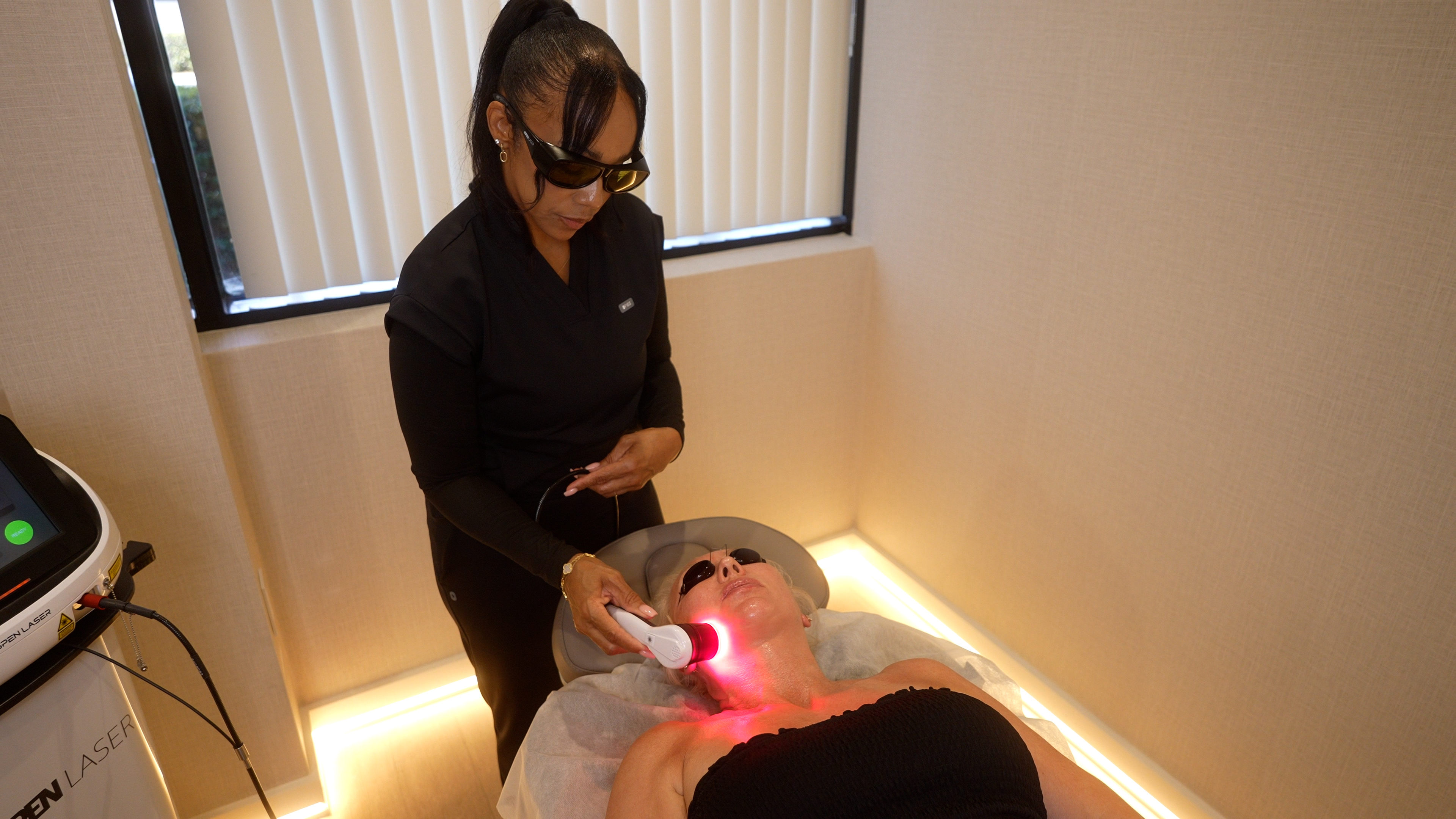
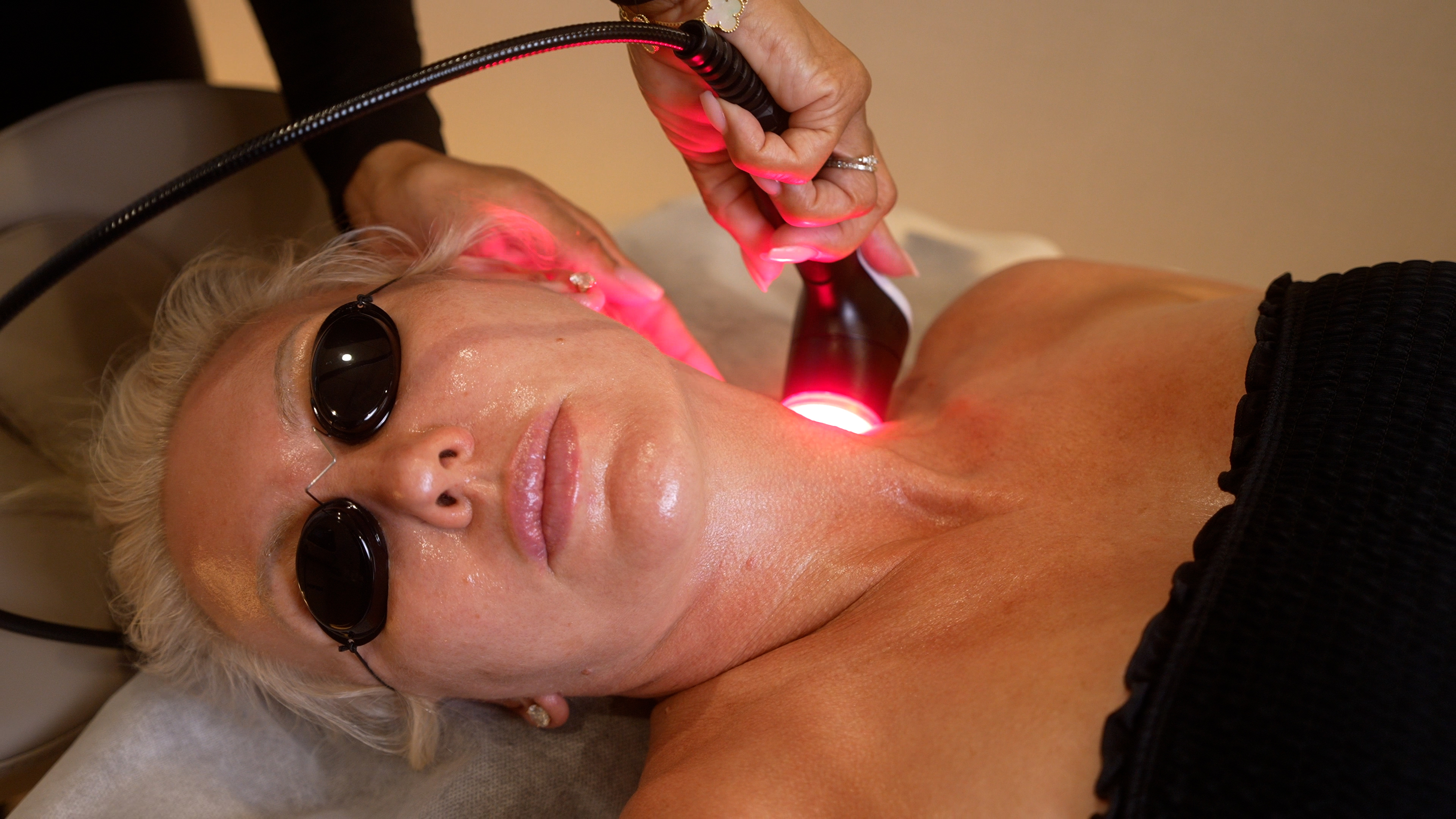
Here's roughly what I gathered on set: before the laser runs, they apply several layers of lotion and liquid so the light can penetrate the skin properly. The treatment is meant to boost the skin's youthfulness, and from what I could tell it produces a slight warming, a controlled, mild burn. That's the extent of what I'll claim, because I'm the camera, not the clinician. When you're filming a medical or aesthetic procedure, staying in your lane matters. You capture it accurately and let the practitioner speak to what it does.
That's actually a useful discipline for this kind of work. My job isn't to explain the science, it's to make the process legible and appealing on camera, and to shoot enough coverage that the client can build whatever story they need in the edit.
Shooting for two formats at once

I deliberately captured the treatment two different ways, because the client needs both and they don't crop from each other well.
Mobile, vertical. Shot native on the phone, 9:16, the way it'll actually live on Reels, TikTok, and Stories. Vertical content shot vertical looks native; vertical content cropped down from a horizontal frame looks like an afterthought, and audiences can feel the difference even if they can't name it.
DSLR, horizontal. The Sony A7S III with a couple of lenses, mixing wider establishing shots with tight close-ups. This is the polished layer, the footage that goes on the website, in a produced ad, or anywhere the brand wants to look premium rather than casual.
Capturing both in one session means the client walks away with a casual-native library and a cinematic library from a single appointment. That's the same batch-efficiency logic I keep coming back to: get everything you can while everyone's already in the room.
Coverage: angles and detail
My focus was variety. High angles looking down at the treatment, low angles looking up, and a lot of detail shots, the hands, the equipment, the product going on the skin. Detail shots are what make procedural content feel expensive. A wide shot tells you what is happening; the macro close-up of a droplet or a gloved hand is what makes it feel considered and clinical in the good sense.
Bringing my own light
Treatment rooms are lit for the practitioner's work, not for a camera. So I brought in a bit of my own lighting to lift it, nothing heavy, just enough to add some shape and cleanliness to the footage without making the space look like a film set. In a clinical environment, the goal is to enhance what's there, not overpower it. A little control over the light is the difference between footage that looks accidental and footage that looks intentional.
The takeaway
You don't always need to be an expert in the subject to shoot it well. You need to be an expert in coverage, enough angles, enough formats, enough detail that whatever the client decides to make later, the footage is already there. Show up, respect the room, light it just enough, and shoot for the edit you can't fully picture yet.